

Organic Vs Sustainable Vs Biodynamic
Have you ever wondered what the difference is between organic and biodynamic wine? And what does this word ‘sustainable’ really mean?
The range of wines that carry these terms on the label is, thankfully, flourishing.. Even in the Champagne region where there are some outstanding alternatives. This is even more impressive considering Champagne is one of the most difficult regions to grow grapes. Let alone grow grapes organically or biodynamically.
For more information about organic Champagne, please read ‘Why you should be drinking organic Champagne’.
In addition, there are some regions who have made the pledge to become fully organic in the coming years. Such as Penedes in Spain. Or there are some regions who have a large proportion of producers who are organic, such as the Terrasses du Larzac which has currently about 75% organic producers.
Confusion reigns
However, there is a lot of confusion as to what organic, biodynamic and sustainable mean.
Which producers are actually certified and for what? What does being certified mean? How does this differ between countries?
What has become clear after I have been asked these questions many times, is that if you are confused. You are not the only one!
Firstly, what is a sustainable wine?
The term ‘sustainable wine’ has a different meaning depending on the country. Conversely, it can depend even on the wine region within a country. Generally, a sustainable wine will be one where the grower will be conscious of using farming techniques to protect the local environment. To put it simply, it will be about safeguarding the vineyard for future generations. And, obviously, protecting the vines for those generations too.
These techniques may include how water and energy is sourced and used. It may also include improving biodiversity of both flora and fauna. Undoubtedly, it will include the careful consideration of what is put into soil or onto the vine. It may even include the choice of planting fungal resistant vines in the vineyard. There are many options that will fit under the term ‘sustainable’.
To clarify, it is not necessarily a term that requires certification. Some regions have developed a Sustainability program specifically for the producers in the region. On the other hand, it just might be something a vigneron will put on their label. There are now, however, regional certifications for sustainability that are beginning to appear on wine labels.
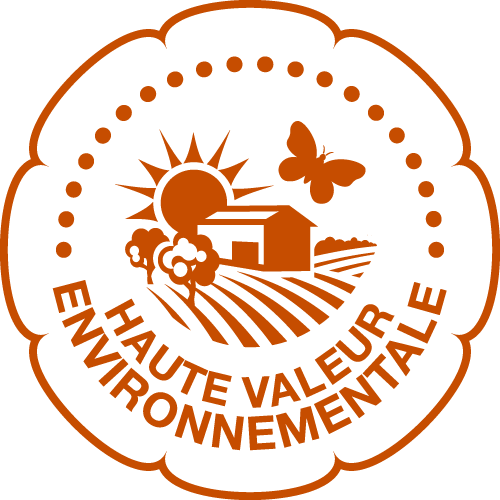
'Certified Sustainable'
Some regions or countries have their own programmes that they will issue a certification to wine producers to use. You will see more and more of these in the future.
One is HVE, a French certification. Haute Valeur Environmentale. This is a certfication that covers four key areas: biodiversity conservation, plant protection strategy, management of fertiliser use and of water. The logo above can be added to products that contain at least 95% of the base materials from certified 'farms'. It was introduced in 2002. HVE3 is the highest level of certification. According to vindefrance, HVE3 vineyards 'rewards farms that use pesticides to a limited extent and favor natural solutions, have the most virtuous water management possible and pay particular attention to the protection of biodiversity, fauna and flora.'
https://agriculture.gouv.fr/hev-certification
Other regions have their own certification. For instance California has a 'Certified Sustainable' programme as does Sonoma county. Italy has the Equalitas-Sustainable Wine standard.

What are Organic wines
While ‘sustainable’ may not require certification, ‘organic’ is the opposite. A producer must be certified to use the term on their label. To use ‘Organic’ requires an official certification. Unsurprisingly, this may vary slightly between countries. Therefore, a producer needs to become certified specifically by their country’s organic regulator. There is no global certification.
The process to attain certification can be expensive and lengthy. It can take years. Although, it is a safe bet that if a winemaker is organic, they are also following sustainable farming principles. Moreover, they may even loosely follow Biodynamic principles but may not have that particular certification.
In short, an ‘Organic’ grape grower cannot use synthetic chemicals in their vineyards. The choices are limited to using a selection of plant or mineral based products to grow and produce their wines. This also means there are restrictions on the use of genetically modified seeds or plant material.
Some countries may have stricter 'Organic' certification than other countries. For instance, in 2025 the French food safety authority, Anses, did not renew the use of a group of copper-based fungicides that have been used as substitutes for synthetic chemicals.
Of course, only organic winemaking products can be used to make that wine as well. For instance, the choice of yeast is likely to be limited. The yeast may need to have been produced using organic material.
To find Organic wines that I have reviewed, please click here.
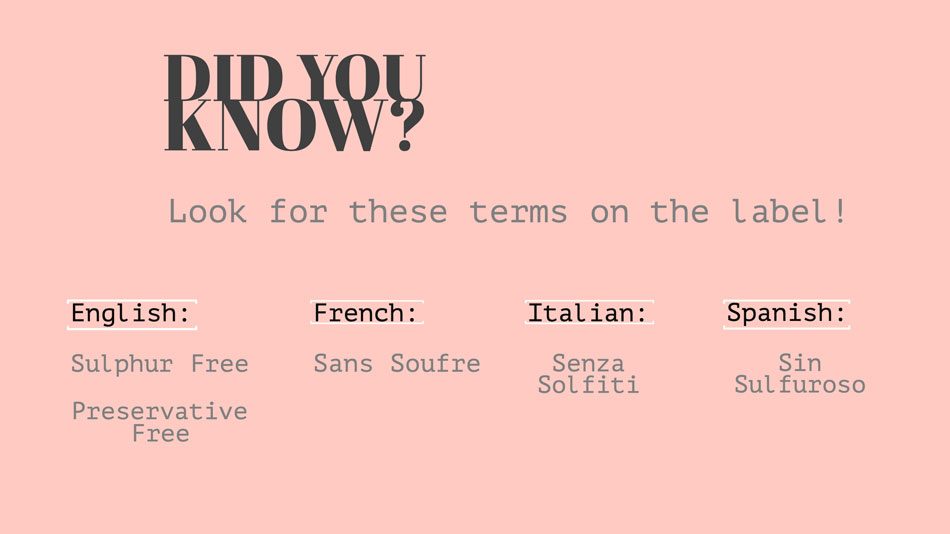
Sulphur and other chemical additions
In saying that, some of the allowable chemicals can differ between countries. This includes sulphur and copper. Countries such as Australia and Europe allow some sulphur to be used. Conversely others, such as the USA do not allow sulphur to be used at all. It should be noted that sulphur is naturally produced. Sulphur is also found naturally in grapes. Hence, there will no wine completely of sulphur. There will be ‘no added sulphur’ wines.
Sulphur is an excellent natural preservative for wine. It can be used during the winemaking process as well as being added at bottling. Otherwise, many wines may have a shorter shelf life and may be prone to other faults.
To understand more about sulphur in wine, please read Sulphite in wine. The Truth: Are Sulphur-free wines any good?
And Biodynamic
Compared to Organic wines and sustainable wines, Biodynamic wine producers follow even stricter rules and regulations. Although some of the principles are the same, Biodynamic principles include traditional farming techniques. For instance, noting the moon’s cycle and how it effects water in the soil.
This assists the wine grower to choose the best days to carry out vineyard tasks. Such as the best days of the month to plant vines, to prune or fertilise those vines. Or even harvest the grapes. Perhaps the least understood of these techniques includes burying manure in a cow horn over winter.

This particular technique encourages enzymes to react within the horn to produce a natural super fertiliser. Then this super fertiliser / manure needs to be significantly diluted. It is then sprayed on the vines during Spring to encourage strong growth.
Like organic wines, the biodynamic principles also dictate processes and additives a winemaker uses. It is important to remember that these techniques are not new at all. Forgotten, is probably more accurate.
To find Biodynamic wines that I have reviewed, please click here.
Can you tell the difference in the wine?
Perhaps. If you really know what to look for. It could be said that some Biodynamic wines are more concentrated. And they are certainly elegant. They are rarely heavy or overly powerful wines.
Additionally, when it comes to vine health, I often hear from biodynamic producers that their vines are healthier in poor vintages. In these conditions, the vines can produce better quality wines when other producers may lose their crops.
Again, like organic producers, biodynamic producers require certification to add this term to their wine labels. Similiarly, biodynamic producers are most likely to also be considered ‘sustainable’.
Why are more producers not certified.
Becoming either a certified organic or biodynamic producer or winemaker involves an often costly process. Undeniably, it is a long process too. For instance, in some countries it might take six years of ‘conversion’ before you can be fully certified as ‘organic’.
While it may be difficult to attain, it is most certainly quite easy to lose that certification. If a winemaker breaks their organic or biodynamic principles, they will have to restart the certification process. This is particularly difficult in poor vintages. Here a producer may have little choice but to use a chemical not allowed under the certification to save their vines.
Some producers may find the process simply not worth the investment of time or money. The situation in the USA is a great example. Currently in the USA, certified organic wines cannot have any sulphur used in the vineyard or the winery. This puts off many would-be certified producers.
Otherwise …
Hence, it is safe to say that there are more organic, sustainable or biodynamic wine producers in the world than there are ‘certified’. It is worth looking on the back label sometimes. The producer may use phrases such as made using organic or biodynamic principles as an indication.
This article was first published September 2024 and updated February 2026.



0 Comments