
Over the past few years there have been some rosé wines from Greece appearing on the UK shelves. Sometimes, the supermarkets will get in a special blend to test the market. After all, in the UK, you don’t often see Greek rosé wines and I think we are somewhat deprived.
In saying that, there are two feature grapes that I have been seeing over the past five + years. The first was Moschofilero and now, in particular, Xinomavro.
You can find out more about both of these grapes by reading:
Knowing your Moschofilero and Malagousia from your Mavrodaphne.
Moschofilero
Moschofilero is a wine that despite the name, apparently is not related to the Muscat grape family. However, it does have a similar aromatic profile. It is, however, a dark pink grape. Hence it is no surprise that it does make a pale rosé wine with enough skin maceration. Sometimes, to add colour, it has a small addition of a red wine as well. It is not at all unusual to find the grape joined by a slug of the much better known Assyrtiko. These wines are as fragrant as you would expect. However, that addition of Assyrtiko gives a minerally undertone that increases the interest and the appeal.
Peloponnese wine lovers will know Moschofilero as one of the regional grapes. Perhaps by the name of Moschofilero-Mantinia. As per the grape’s name, in higher altitude Mantinia it retains its exotic perfume. As well as it freshness. The average altitude within the Mantinia region is around 660 metres. However, it can reach up to 800 metres.
Xinomavro
Over the past year or two though, I have been discovering rosé wines available that are made from Xinomavro grapes. Xinomavro is a very significant red grape. Particularly from central and northern Greece. Naoussa, Amynteo, Goumenissa and Rapsani produce some of the finest examples of the grape.
It is not surprise that some of these rosé wines are made using the saignee method. This is where the grapes start their ferment journey as if they are making red wine. However, a portion of the must is split off to make a rose wine. This tends to mean that the remaining red wine will have greater concentration and more colour. This is the result of having less must, or juice, in contact with the skin. The benefit for Xinomavro wines is that the grape tends not to give deep colours. Xinomavro red wines have a tendency to be brightly coloured red.
Here are three Greek rosé wines to find on the shelves today:
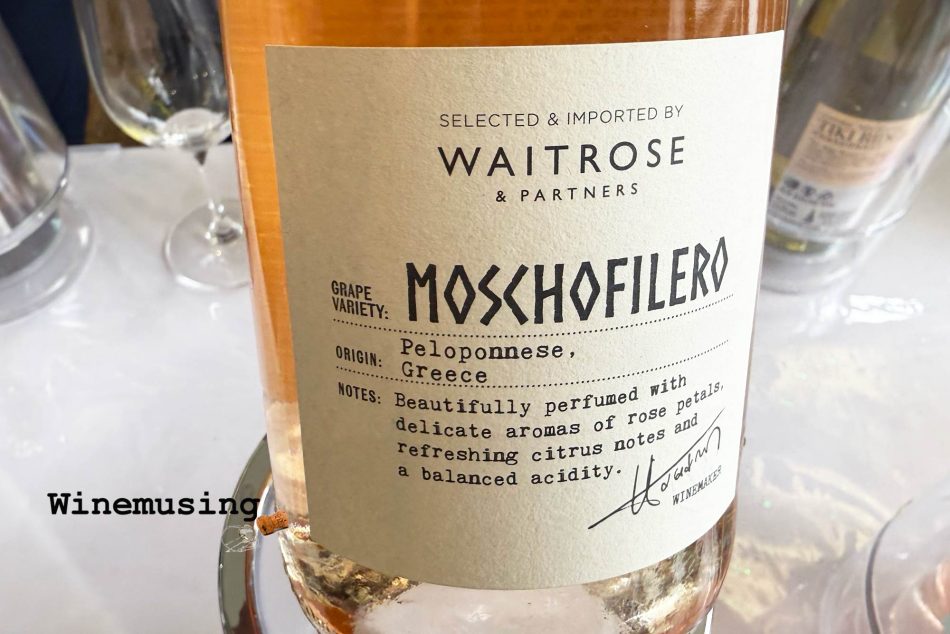
Waitrose Loved & Found Moschofilero Rosé
This is a Waitrose limited time exclusive blend of Moschofilero with 5% each of Assyrtiko and Syrah. These grapes all come from higher altitude vineyards in the Peloponnese peninsula. That peninsula to the west of Athens. To maintain the fresh fruitiness of the wine, it was all fermented in stainless steel. The wine is dry (1.2 grams/litre of residual sugar) and generous.
That Moschofilero is very apparent in the peach and guava ripeness. However, a sweep of lime juice adds a tautness aromatically and to the flavours. This is a well balanced rosé with freshness at its core. Enjoy this wine with Asian flavours or with a fresh salad. (note: This may have been a seasonal wine, check for availability)
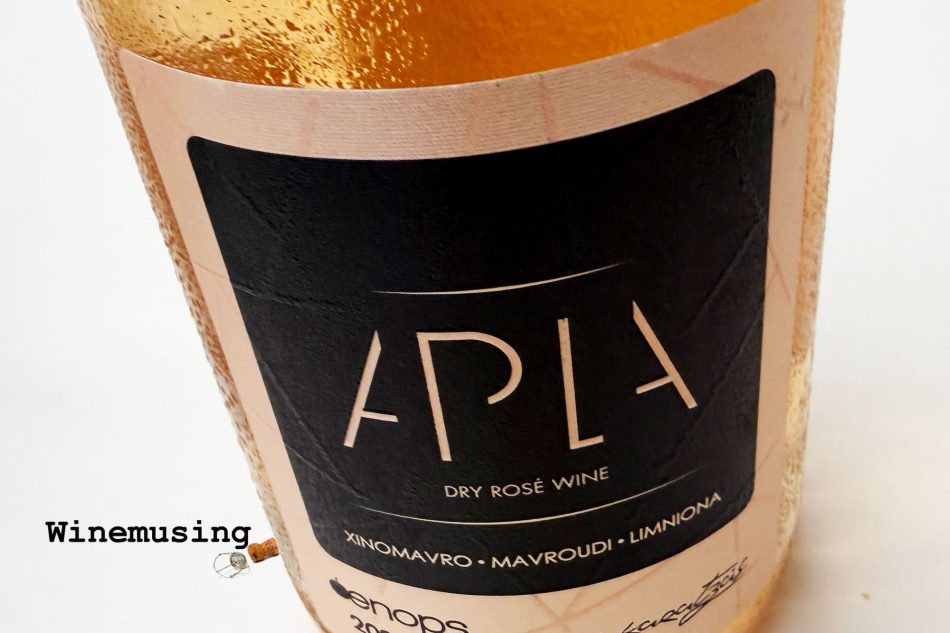
Oenops Apla Rosé
This pale pink wine is an interesting blend of 50% Xinomavro, 20% Limniona and the rest Mavroudi. Mavroudi is another name for the Bulgarian black grape, Mavrud. The grapes are sourced from Northern Greece. To maintain the fruitiness being front and centre, the wine ferments in stainless steel. However, to add some silky texture and polish, the wine sits for a few months on lees.
What are lees? Click here to read about lees in wine making.
The wine is dry (only 1.5 grams/litre residual sugar) and is a mouthfiller. The aromas of peach, blossoms and strawberry have a herbal twist. It has balance and texture. An interesting wine that really doesn’t need food. (RRP£16)
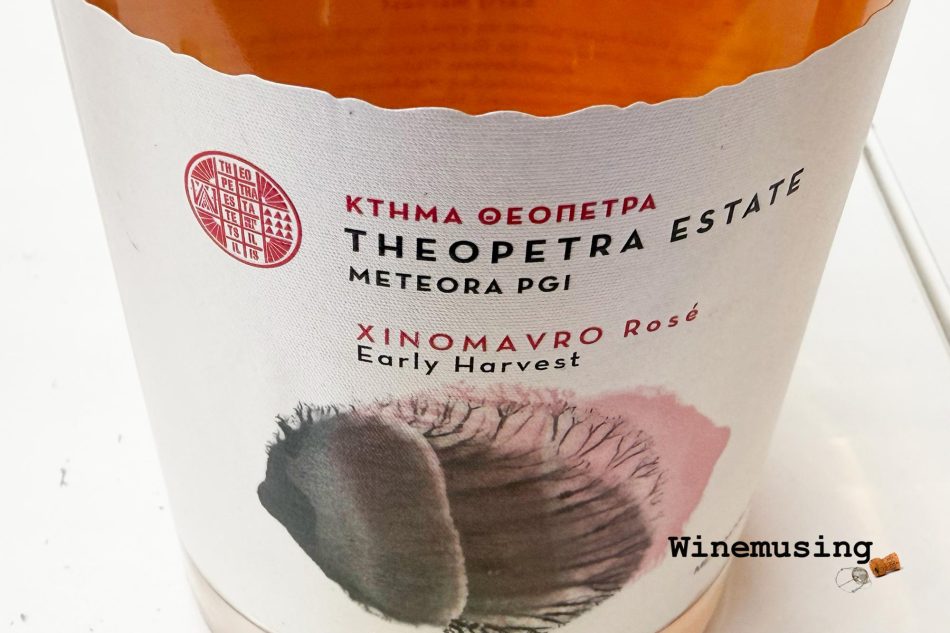
Theopetra Estate Xinomavro Rosé
The Theopetra Estate vineyards are in Thessaly, Greece. Being inland enough, the vineyards are subject to hot sunny days in the ripening period. This heat turns very cool of a night giving the grapes a break from ripening. This helps them to retain their acid levels while reliably getting ripe.
This a paler pink style rosé wine. It is dry, fuller in body and ripe with lush strawberries and peach fruit. There is a perfumed floral note too. The acid is fresh and there is a light grapefruit tang to the finish to underline the berry and stonefruit. Plenty to love here. (RRP£20)
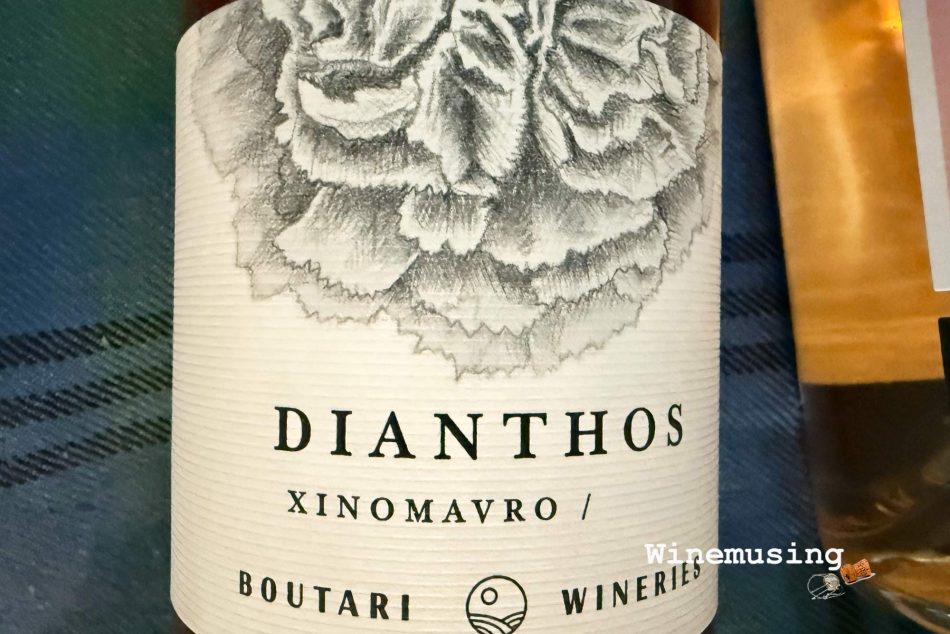
Dianthos Xinomavro Rose
This one is 100% Xinomavro and comes from Naoussa in Greece (although it is labelled as Imathia PDO). It is a dry, medium salmon colour wine that is fruity with some minerally savouriness. It is fragrant and has a fresh balance. The flavours last long in the mouth.
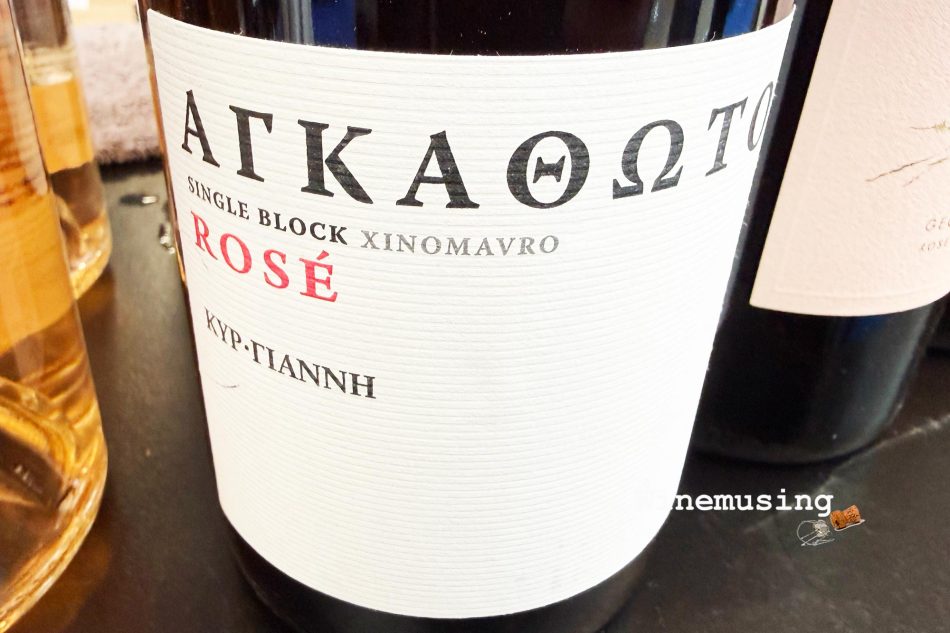
Kir-Yianni Agathoto Xinomavro Rosé
The fruit for Kitma Kir-Yianni Agathoto grows in the region of Naoussa. Some of these vines were planted in 2014. This rosé is a light salmon colour in the glass. It is a spicy dry pink wine (residual sugar under 4 g/L). A portion of this wine is whole bunch pressed and the wine ferments in batches. One batch ferments in French oak and the other in vats. Interestingly, the wine spends up to 8 months in large format oak to gain even more texture and complexity.
The aromas of apricot, grapefruit and cinnamon give way to melon and cherry flavours with some vanilla as well. It is a fleshy rosé that has some richness in the silkiness in the mouth. This wine has been on a remarkable journey before it even enters the bottle. (RRP£35)
Now… if you cannot find this particular rosé, Kir-Yianni do make one that is more easy to find and is not oaked, but has had some time on lees. It is fresh and vibrant. Look for the Kir-Yianni Xinomavro rosé which sells for around £20.
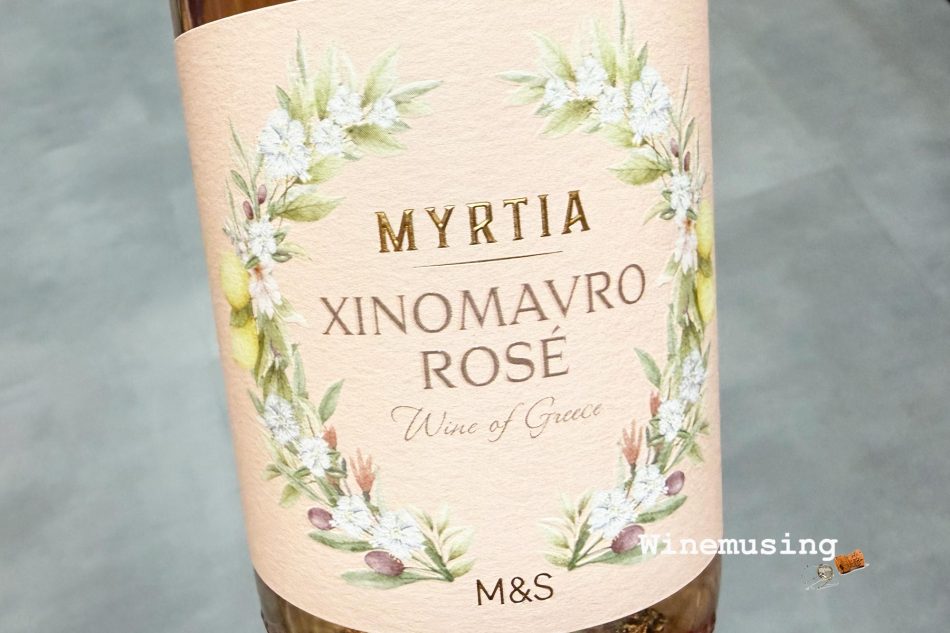
Myrtia Xinomavro Rose is M&S's own brand offering. I believe it is also made by Kir-Yianni and it is certainly well made as you would expect.
It is dry, paler coloured salmon pink with plenty of strawberries and cherries on offer. Refreshing and fruity and at a good price.
You can find out more about some of the grapes of Greece by reading:
Knowing your Moschofilero and Malagousia from your Mavrodaphne.
Published in June 2025. Updated June 2026.



0 Comments